Being in the moment

We arrived at the ‘Mini Beer Bar’.  I turned to D: “Bit early, don’t you think?” Mini Beer man looked at us and said: “Well… maybe, but this is a festival…”

After hearing about small beers, we decided coffee may be more fitting given the hour at this most edifying of outdoor gatherings which annually draws summer firmly to a close.

AI was all over the place, in every speaker’s address, on every person’s lips.

Nick Clegg, Philip Stephens and Lea Ypi contributed to a panel discussion on whether democracy could survive AI advances. “There’s a power paradox with it” Nick said.  “AI both empowers people and aggregates power in the hands of a tiny amount of men in the world – those that run the tech companies. You need politics to intervene… technology can’t be isolated as the entire problem in society.”  Philip echoed this sentiment: “Politicians need to restore a social contract – if people work hard they’ll be rewarded. It means taming the tech giants.”

In the complex narrative surrounding our fourth industrial revolution and frustrated attempts to understand it, Yuval Harari cut through the noise: “This is the first time we’ve produced a technology which has agency: it can invent ideas by itself in, for example finance, religion and politics. Humans cannot regulate AI because they don’t have all the information.  We need to focus on immediate questions like, should AI be able to open a bank account? The onus is on leaders to deal with the immense forces being unleashed.”

A cloud lingered over the sun. We paused at Louis Roederer: “What do you think, D?”
“Shall we?” he replied.
We stared at the champagne bar momentarily and then ambled on, neither really feeling the draw of bubbles.

Next stop was the FT Weekend literary interview with David Nichols.  Following the triumph of One Day, his latest novel creates friction by throwing his main characters together – as opposed to keeping them apart. He figured dropping them into a muddy field as opposed to a city backdrop of restaurants and cafes could create a more comedic element. 

The inevitable question came on AI and fiction. David responded: “It’s a bit like buying a bicycle back from someone who stole it from you. Sure, it’s useful for summarising, re-writing and editing, but that’s the part I love doing!”

‘How to quit it – from screens to substances’ had D and I turning to one another as the session drew to a close.  “I’m tired” I said, “Me too” D replied. 

We smiled at each other, picked up our bags and wandered out of the tent and onto the soft sunlit grassy slope overlooked by Kenwood House. We thanked people at the exit, briefly sharing what we’d enjoyed this year.

Sinking into the back of a taxi we talked dinner plans, debated the opinions we’d heard, laughed at shared memories from the day and with relief, slowly made our way back to the here and now.

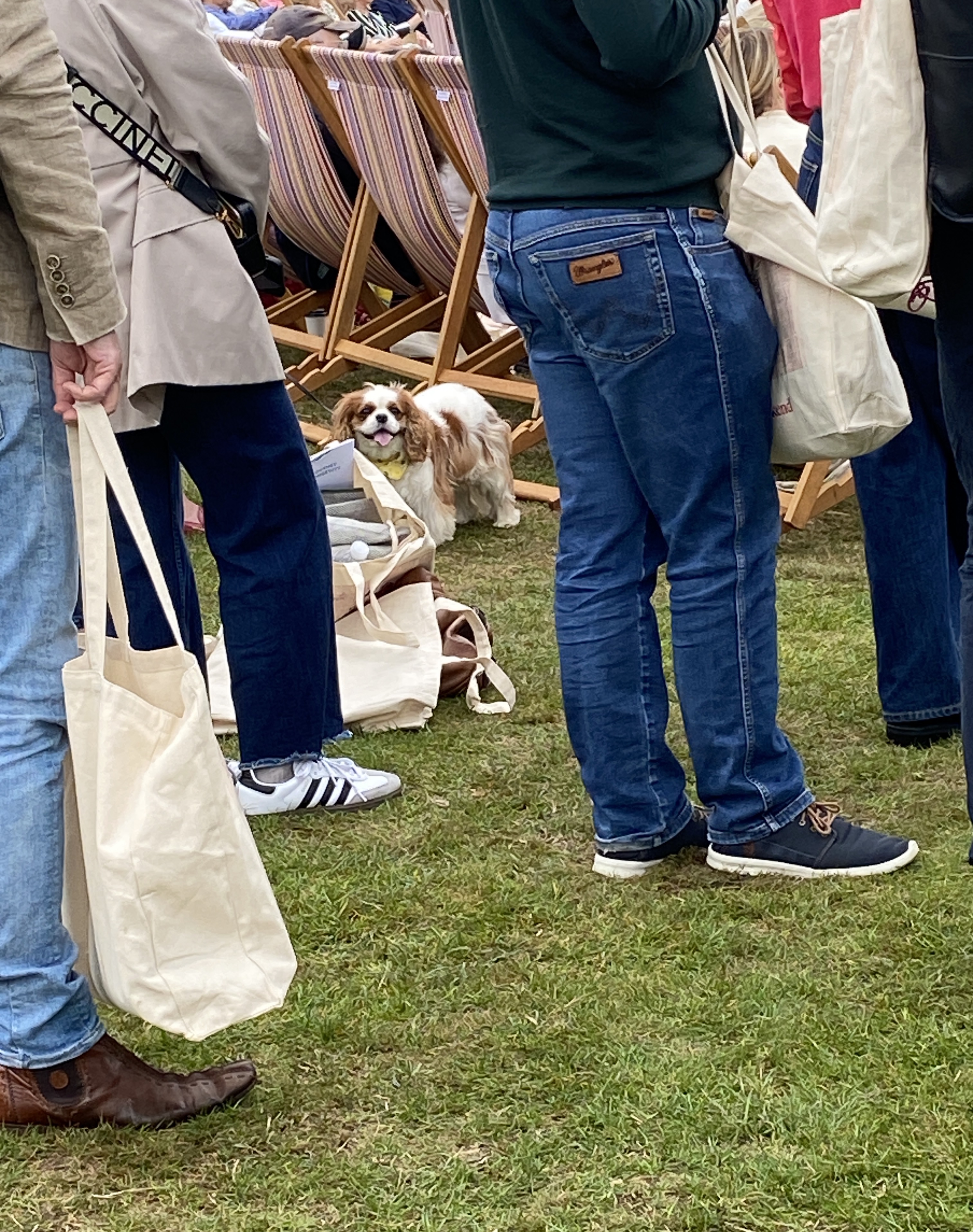
Photo: ‘A world in turmoil: nationalism, populism, migration, AI advances – can democracy survive?’ with Lea Ypi, Nick Clegg, Philip Stephens and Alice Fishburn.
A Capsule in Time

“I’ve only just got it” explained the man in front of me at the end of Marina Tabassum’s talk on the 2025 Serpentine Pavilion. He was referring not to the pavilion she’s designed but rather his new ‘phone/camera which I’d had my eye on as he snapped away during the event. The lens seemed to be of an extraordinary quality rendering every image which appeared on the screen immaculate, pristine and of a clarity my eyes couldn’t quite believe.

I futilely brushed the lens of a now virtually vintage iphone 11 on my jeans and attempted to take a few more photos of where I was at: ‘A Capsule in Time’ a pill-like shaped temporary pavilion next to the old Serpentine gallery marking 25 years of like minded architecture. Except… this one is different – it moves.

Jordan and I studied the pavilion from a distance.  “I’ve worked here for seven of these, and this is my favourite so far.”

“Why?” I asked.

Continue reading “A Capsule in Time”

Facing it

September brings one reluctantly down to earth. A gentle easing in is how I decided to do it via the FT Weekend Festival at Kenwood House. Nothing too heavy would do for the moment I decided. Not for me ‘So what does the FT really think?’ or Deborah Meaden on ‘Questions and business pitches at the ready?’. Not even ‘BREAKING NEWS on the FT Festival line-up! William J Burns, Director of the US Central Intelligence Agency and Richard Moore, Chief of UK Secret Intelligence Service’ – appearing together for the first time ever at a public event.

An Uber deposited me at the gates of Kenwood on Saturday morning and not long after I took my seat, zen-like, artisan coffee in hand, for my first speaker of choice – John Lithgow.

The lady next to me was on my wavelength: “Yes, I’m doing the same – going lite today” she told me.
I mentioned my itinerary which included ’50 Years of Disco’.
“That’s on my list too” she said. “I wonder when that starts from exactly?”
“I’m sure they’ll tell us – but it’s got to be before 1974?”

John’s mellifluous tones washed over me pleasantly: “Roald Dahl”…”The Royal Court”, and on 3rd Rock from the Sun: “The most fun you could possibly imagine: When does that happen now? .. It’s a milder drink.”

“What about Dahl’s antisemitism though?” Janine Gibson asked.
“Well, the play’s about the difficult and thorny issue of any person creating art” he replied.
Janine persisted on the same theme.
“You know, he struck me as an outsider wanting in – that heartburn in a person’s nature can be grounds for something else developing” JL replied.

Notions I’d had of side stepping the big stuff were showing signs of fading.

Continue reading “Facing it”

Frieze!

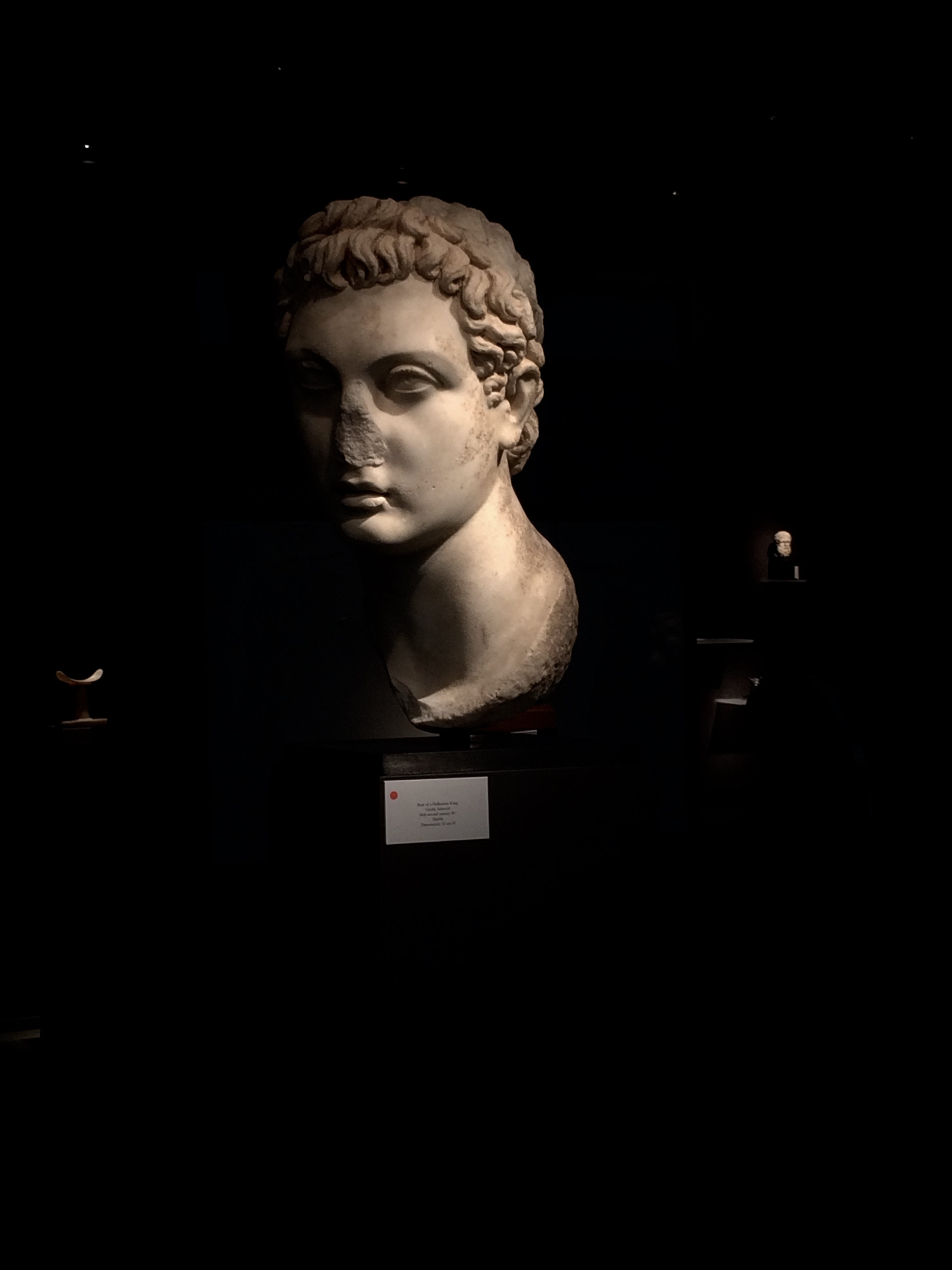
img_3756I tweeted H: ’Unfortunately it’s sold, so I can’t get it for you.’
‘Where is his nose?’ came the response. I ignored the question, after all a bust of this Hellenistic King from mid century BC was bound to come a cropper at some point in the last few centuries.

Frieze Masters hosted this fine piece of art along with many others of repute and fame, their makers well established in art history vernacular. From Picasso to Bonnard, Dali to Louise Bourgeois, these were all artists we can agree on as having made it. The elite hush of this particular part of Frieze held a reverence indicative of solemn recognition and certain provenance, to say nothing of sky high prices.

Across a cooling October park lay Frieze London.

I headed to the bathrooms, noting that Julie Verhoeven was performing a piece of her art there entitled ‘The Toilet Attendant … Now Wash Your Hands’. One of many works this year with a message cloaked in humour.

A blue strip of carpet led to the ladies, a pink to the mens. Once that initial confusion was dealt with I entered to the usual set up save a few trolleys dotted about laden with the tools of a loo attendant’s trade.  I spied the artist suitably dressed in the latter’s regalia.

‘I just want you to know, I’ve washed my hands’ I said.
‘But did you put the loo seat down?’ she asked, ‘It’s amazing how many people don’t.’ ‘Well, that could be because they’ve become confused by the blue and pink carpet. Perhaps you would find that if you went into the mens all the loo seats would be resting in situ between visits.’
‘Ha!’ she replied. ‘Maybe.’

Through the fair I wandered, stopping in my tracks for some pieces, marvelling at them, rendered mute by others such were the thoughts and feelings provoked.

I heard my name being called:  An old acquaintance from the 90’s, and art collector. I told him about Julie’s work.  ‘Did she ask you for a pound? Is that how artists are making money these days?!’ he laughed.

The question’s answer is potentially the same as it was in mid century BC as it may be in 50 years; a benefactor, menial work or connections – the way the pendulum swings dependent on our appetite for and willingness to appreciate another narrative to our daily lives.

Frieze Art Fair until 9th October, Regent’s Park, London.

Ms Georgia O’Keeffe

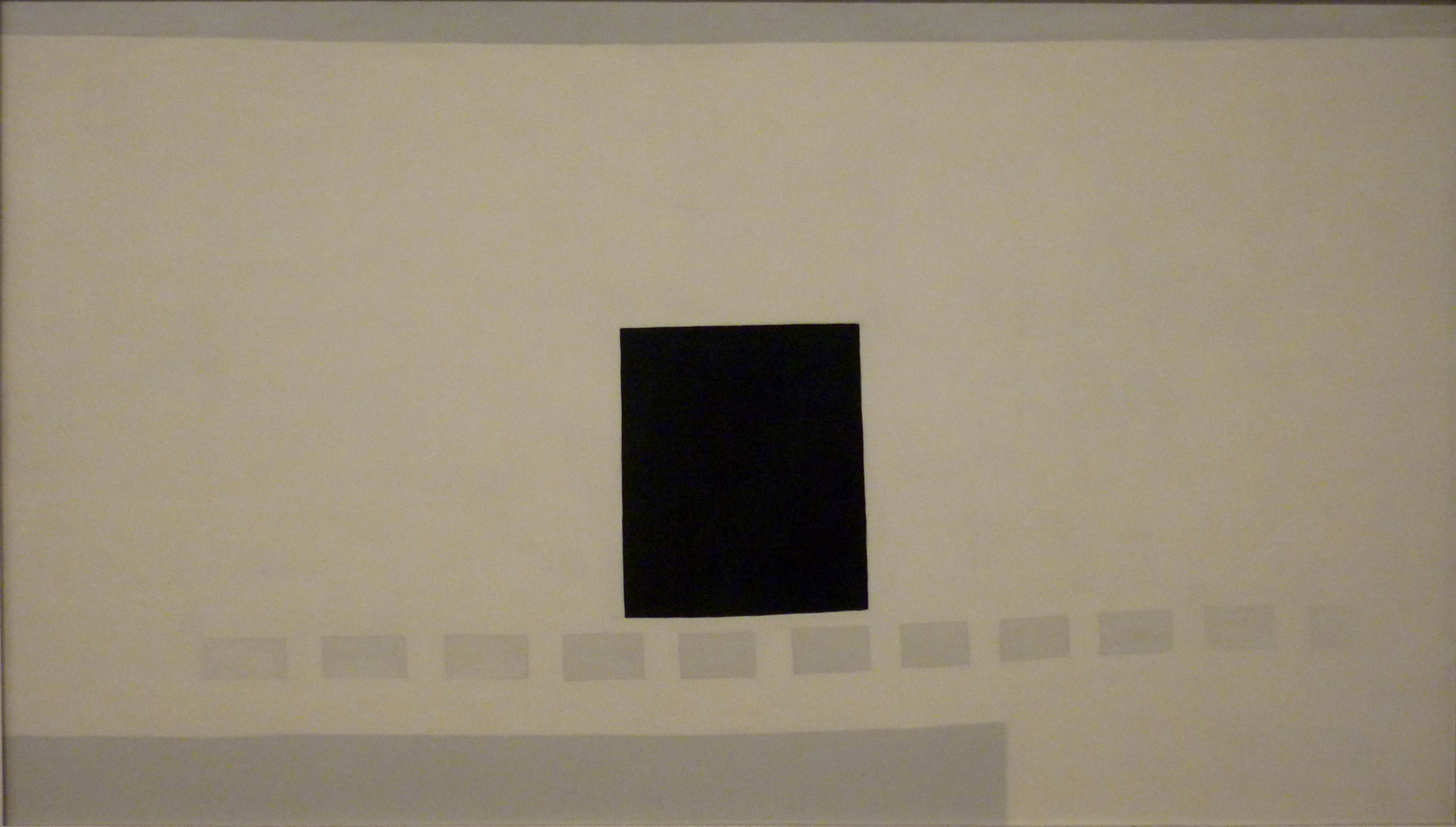
P1080066The last time I got tearful at an exhibition was The V&A’s Alexander McQueen show.  Today at the new Tate Modern’s sensitively and sublimely curated exhibition of Georgia O’Keeffe’s work, it happened all over again.  And then some.
Rounding the corner of one of the first rooms I came face to face with ‘Music – Pink and Blue No. 1’.  This was the catalogue cover of my first, and until this day, only viewing of Ms O’Keeffe’s art in the flesh as it were.  That was in 1987, just a year after she died.

A flood of memories surfaced; living in New York and then Washington D.C. where the show had taken place at the National Gallery of Art. Tears pricked my eyes.  Her powerful and confident strokes of both paint and charcoal reveal a determined character:  Determined and dedicated to being true to herself.

In her own words, quoted on the introduction to each room in this exhibition she comes across as a woman of single mind and focus.  I could say ‘person’ here, and many of the often cited quotes on her work refer to her as a great ‘woman’ painter which she famously railed against, saying ‘The men liked to put me down as the best woman painter. I think I’m one of the best painters’. However, only a female artist could say: ’Of course I was told it was an impossible idea – even the men hadn’t done that well with it’ on painting the New York landscape.

She knew she was up against it to be taken seriously as a woman who made art, and nothing less than 100% of herself would do.

Through showing such an extraordinary variety of her work in this exhibition, the Tate seeks primarily to champion O’Keeffe’s own insistence that her work was not overtly sexualised, that every flower and landscape she painted had little to do with sexuality and in particular the female body.

It’s largely succeeded in this mission, but there’s no getting away from the fact that there is an inherent sensuality and almost erotic like quality imbued within her paintings in particular – whether they be of New York skyscrapers or clouds floating beneath blue skies.  Nature was such a source of inspiration to her, and that in its most basic form is reproduction – in all that is created.

The final rooms hosting her paintings from New Mexico stirred up emotion again. The ruthless and unrelenting desire to demonstrate clarity and one’s own truth is particularly piercing in the Pelvis series and the paintings of her Abiquiú house. The sense imparted is of an infinite search for oneself, to strip back all that doesn’t matter and reach the core:  ‘I feel there is something unexplored about woman that only woman can explore’ she once said.

Her love of nature and the nature of love, in particular for oneself, is imbued in all Georgia O’Keeffe’s work. She just couldn’t help herself. P1070963
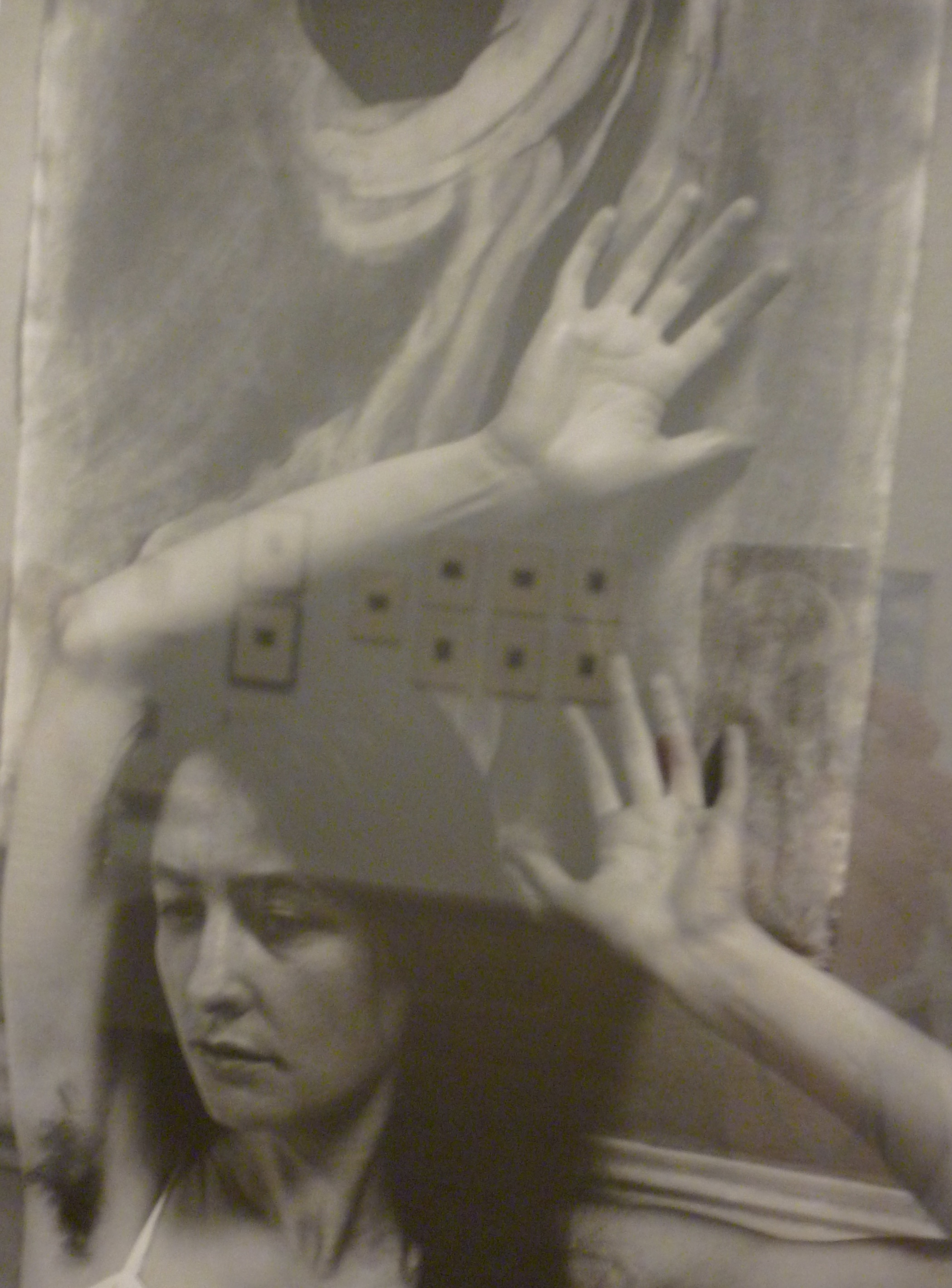
‘My Last Door’ Georgia O’Keeffe.  Portrait of Georgia O’Keeffe by Alfred Stieglitz.

Georgia O’Keeffe at Tate Modern 6 July – 30 October 2016.